
A Civil War Thanksgiving: Recipes from the 1860s for Your Holiday Table
Turkey, stuffing, potatoes, macaroni and cheese, squash, and something sweet for dessert. Sound familiar? While Thanksgiving traditions have changed considerably over the last century and a half, many of the foods we associate with the holiday today would have been recognizable to Americans celebrating during the Civil War.
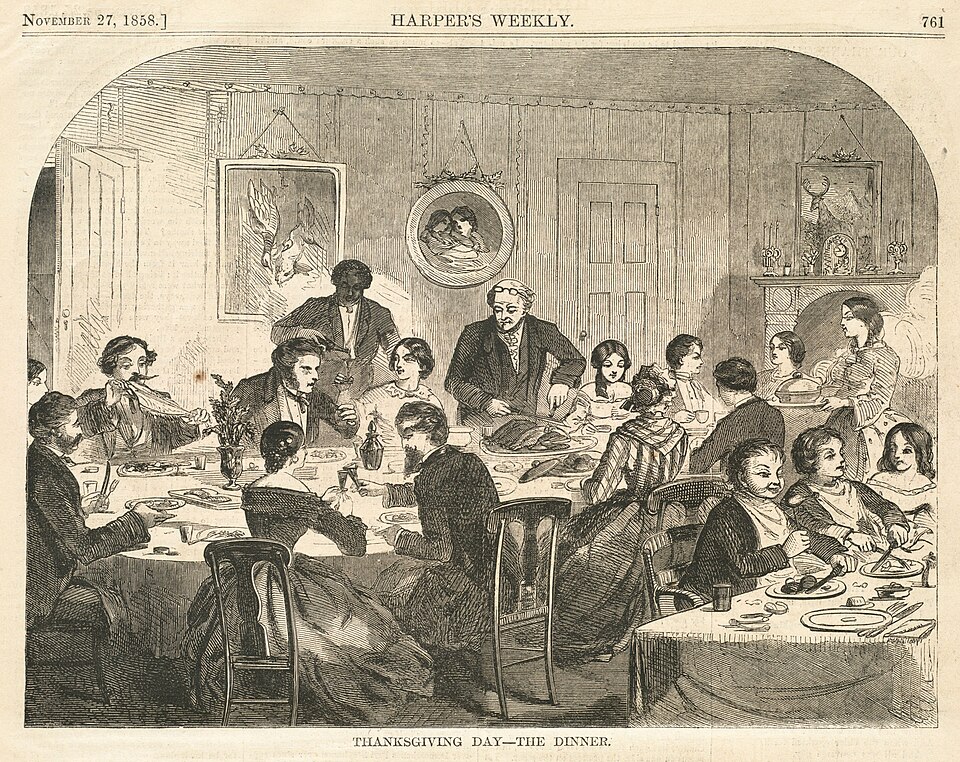
Thanksgiving Day — The Dinner (Harper’s Weekly)
For 19th century cooks searching for inspiration, Godey’s Lady’s Book and Magazine was a popular source of recipes, household advice, fashion, and holiday traditions. Under the editorship of Sarah Josepha Hale, the magazine also became one of the most influential advocates for establishing Thanksgiving as a national holiday. In 1863, President Abraham Lincoln proclaimed the last Thursday of November a National Day of Thanksgiving, bringing renewed attention to a celebration already familiar in many American households.
One of my favorite aspects of working in culinary history is the opportunity to piece together menus from historical recipes and explore the foods people might have enjoyed more than a century ago. Thanksgiving presents a particularly interesting opportunity to do just that. Many of the dishes we associate with the holiday have long histories, and recreating their earlier versions offers a chance to experience familiar foods in new ways.
With that in mind, I’ve assembled a Thanksgiving menu using recipes published in Godey’s Lady’s Book during the Civil War. Although these recipes originally appeared in different issues of the magazine, they offer a selection of dishes that could have been served at a 19th century holiday dinner. From roast turkey and potatoes to macaroni and cheese, winter vegetables, and two desserts, the menu retains much of the familiar character of a Thanksgiving meal.
The pleasure of trying these recipes lies in discovering both their similarities to and differences from what we prepare today. Familiar ingredients are combined with different seasonings, sauces, and cooking techniques, introducing new flavors without departing too far from the traditional holiday table. Whether preparing the entire menu or trying just one or two dishes, it’s an opportunity to explore the food of the Civil War era through the experience of cooking and sharing a meal.
TO ROAST A TURKEY. —Prepare a stuffing of pork sausage-meat, one beaten egg, and a few crumbs of bread: or, if sausages are to be served with the turkey, stuffing as for fillet of veal; in either, a little shred shallot is an improvement. Stuff the bird under the breast; dredge it with flour, and put it down to a clear, brisk fire; at a moderate distance the first half hour, but afterwards nearer. Baste with butter; and when the turkey is plumped up, and the steam draws towards the fire, it will be nearly done; then dredge it lightly with flour, and baste it with a little more butter, first melted in the basting ladle. Serve with gravy in the dish and bread sauce in a tureen. It may be garnished with sausages, or with fried forcemeat, if veal stuffing is used. Sometimes the gizzard and liver are dipped into the yolk of an egg, sprinkled with salt and Cayenne, and then put under the pinions before the bird is put to the fire. A very large turkey will require three hours’ roasting; one of eight or ten pounds, two hours; and a small one, an hour and a half.[1]
WINTER SQUASH. —This requires rather more boiling than the summer kind. Pare it, cut it in pieces, take out the seeds and strings; boil it in a very little water till it is quite soft. Then press out the water, mash it, and add butter, salt, and pepper to your taste. From half to three-quarters of an hour will generally suffice to cook it.[2]
TURNIPS IN GRAVY. —To a pound of turnips sliced and cut into dice, pour a quarter pint of boiling veal gravy, add a small lump of sugar, some salt and cayenne, or white pepper, and boil them quickly 50 to 60 minutes. Serve them very hot.[3]
MACCARONI CHEESE. —Wash six ounces of maccaroni, put it in plenty of boiling water and a good deal of salt, let it boil half an hour, drain it in a colander; grate a quarter of a pound of rich cheese, place the maccaroni and cheese in alternate layers, in a shallow quart pie dish, letting the cheese come on the top; fill the dish with milk, in which a little butter has been melted (but the milk must scarcely be seen in the dish), and upon this again place some small bits of butter ; it should be placed in a very hot oven, where it will bake at the top and bottom equally in half an hour.[4]
POTATO BALLS. —Take four potatoes, boiled the day before, grate (not rub) them. Add two tablespoonfuls of flour and two eggs, salt, and a very little nutmeg. Make into round balls, put them into boiling water, and boil twenty minutes. Oil some butter and brown some chopped onions in it. When the balls are finished, throw over them raspings of bread, and then pour on the hot oil and onions.[5]
PUMPKIN PUDDING.—Take one pint of pumpkin that has been stewed soft and pressed through a colander; melt in half a pint of warm milk a quarter of a pound of butter and the same quantity of sugar, stirring them well together; one pint of rich cream will be better than milk and butter; beat eight eggs very light, and add them gradually to the other ingredients alternately with the pumpkin; then stir in a wineglass of rose-water and two glasses of wine mixed together, a large teaspoonful of powdered mace and cinnamon mixed, and a grated nutmeg. Having stirred the whole very hard, put it into a buttered dish, and bake it three-quarters of an hour.[6]
BAKED APPLE PUDDING. —Twelve ounces of fine flour, four ounces suet chopped fine, one teaspoonful of baking powder, and a little salt. Mix with cold water to a paste; have ready a well-buttered basin or mould that will hold a quart; roll out the paste and line the basin, leaving a little for the top; fill it with apples pared and cored; add golden syrup and sugar; roll out the paste for the cover, moistening the edges to make it stick; fresh suet from a loin of mutton is the best. Thirty-five to forty minutes will bake it, turn out upon a dish, and serve.[7]
Sources
[1] “To Roast a Turkey,” Godey’s Lady’s Book and Magazine 67 (December 1863): 581.
[2] “Winter Squash,” Godey’s Lady’s Book and Magazine 64 (January 1862): 90.
[3] “Turnips in Gravy,” Godey’s Lady’s Book and Magazine 64 (January 1862): 90.
[4] “Maccaroni Cheese,” Godey’s Lady’s Book and Magazine 63 (September 1861): 251.
[5] “Potato Balls,” Godey’s Lady’s Book and Magazine 66 (April 1863): 393.
[6] “Pumpkin Pudding,” Godey’s Lady’s Book and Magazine 67 (December 1863): 580.
[7] “Baked Apple Pudding,” Godey’s Lady’s Book and Magazine 67 (October 1863): 374.
About the Author
Katie Migneault is both a professional chef and a culinary historian. She received her MA in History from the University of Massachusetts-Boston. She works as the Retail Manager at the Museum and keeps a jar of hand-made salt pork on her desk.
Tags: Civil War, recipes, Thanksgiving Posted in: Uncategorized